Questions patients ask
Questions about your heart? Start here.
Plain answers to what patients actually ask Dr. Jeffrey Tauth: what a test involves, what happens on the day, and what to bring. General information, written to be read the night before an appointment.
Ask anything. No question about your own heart is too small for the people who answer this line.
Common questions
Start with the question on your mind
Short, plain answers, grouped by topic. Tap a question to read the answer.
Booking and your visit
How do I make an appointment?
Call (501) 767-4278. The Hot Springs office at 110 Crackerbox Lane is open Monday to Friday, 8:30 AM to 12:00 PM and 1:00 to 5:00 PM.
The Mena office at 400 Crestwood Circle, Suite J runs on scheduled clinic days that vary each month. If you want to be seen in Mena, call first and ask which days the clinic is running.
Is there a patient portal?
Yes. The practice uses an athenahealth patient portal. You will find the link on the contact page.
Tests and procedures
What is a cardiac catheterization?
A test that shows how blood flows through the arteries that supply your heart. A thin, flexible tube called a catheter is passed through a blood vessel, usually at the wrist or the groin, and a contrast dye makes the arteries show up on an X-ray. It shows whether any artery is narrowed, where, and by how much.
Talk to your doctor about why the test is being recommended for you.
Will I be awake during a catheterization?
Usually, yes. Most people are given medicine to help them relax, and the entry site is numbed first. Your care team will tell you what to expect for your own procedure.
Risk factors
What raises the risk of heart disease?
The main risk factors are high cholesterol, high blood pressure, diabetes, smoking, and a family history of heart disease. Most of these can be treated or changed. Family history cannot, but it is worth knowing and telling your doctor about.
Can high blood pressure hurt my heart if I feel fine?
Yes. High blood pressure often causes no symptoms at all. Over time it strains the heart and damages the walls of blood vessels, which raises the risk of heart attack and stroke. That is why it is checked more than once, and why treatment matters even when you feel well.
Talk to your doctor about what your readings mean.
Prevention
What can I do to lower my risk?
Eat a diet low in salt and high in fruit and vegetables, stay physically active, and do not smoke. If you have been prescribed medication for blood pressure, cholesterol or diabetes, take it as directed.
Talk to your doctor before starting a new exercise plan, especially if you already have a heart condition.
Should I stop a heart medication if I feel better?
No. Do not stop or change a prescribed medication without talking to your doctor first. Many heart conditions cause no symptoms, so feeling well is often a sign the treatment is working, not that you no longer need it. If a medication is causing side effects, say so. There are often alternatives.
When to get help
When should I call 911?
Call 911 for chest pain or pressure, shortness of breath, or any symptom you think may be an emergency. Do not wait for an appointment or a call back.
Can I send my symptoms or questions through this website?
No. Please do not send medical details through this website. It is not a secure or monitored channel. Call the office at (501) 767-4278 instead, and call 911 in an emergency.
What to expect
What happens, step by step
From your first visit to a test, a procedure and follow-up, so nothing comes as a surprise.
Common reasons people are referred
What an interventional cardiologist treats
Coronary artery disease
Arteries that carry blood to the heart can narrow over time. Diagnosis and treatment aim to restore blood flow before a narrowing causes a heart attack.
Angioplasty and stents
A narrowed artery is opened with a small balloon, and a mesh tube called a stent is often placed to hold it open.
Cardiac catheterization
A thin tube is guided to the heart so blood flow and heart function can be seen directly. It is a diagnostic test, not surgery.
Heart valve disease
Mitral and tricuspid valve conditions are evaluated and treated so blood moves through the heart the way it should.
High blood pressure
Ongoing high blood pressure strains the heart and stiffens vessel walls. Management combines monitoring, medication and day-to-day changes.
Prevention and risk review
Cholesterol, diabetes, family history and smoking all raise cardiovascular risk. A risk review looks at yours and what can be changed.
Who you will see
The same cardiologist, from first visit to follow-up
Jeffrey G. Tauth, M.D., F.A.C.C. is a board-certified interventional cardiologist who has practiced in Arkansas for more than 30 years. He sees patients in Hot Springs and Mena.
If you have been referred for a test or a procedure and are not sure what it involves, calling the office is the fastest way to get a straight answer. Nothing on this page replaces that conversation, or your own doctor's advice.
Where you will be

Most visits start here, with a conversation and an examination, not a procedure.
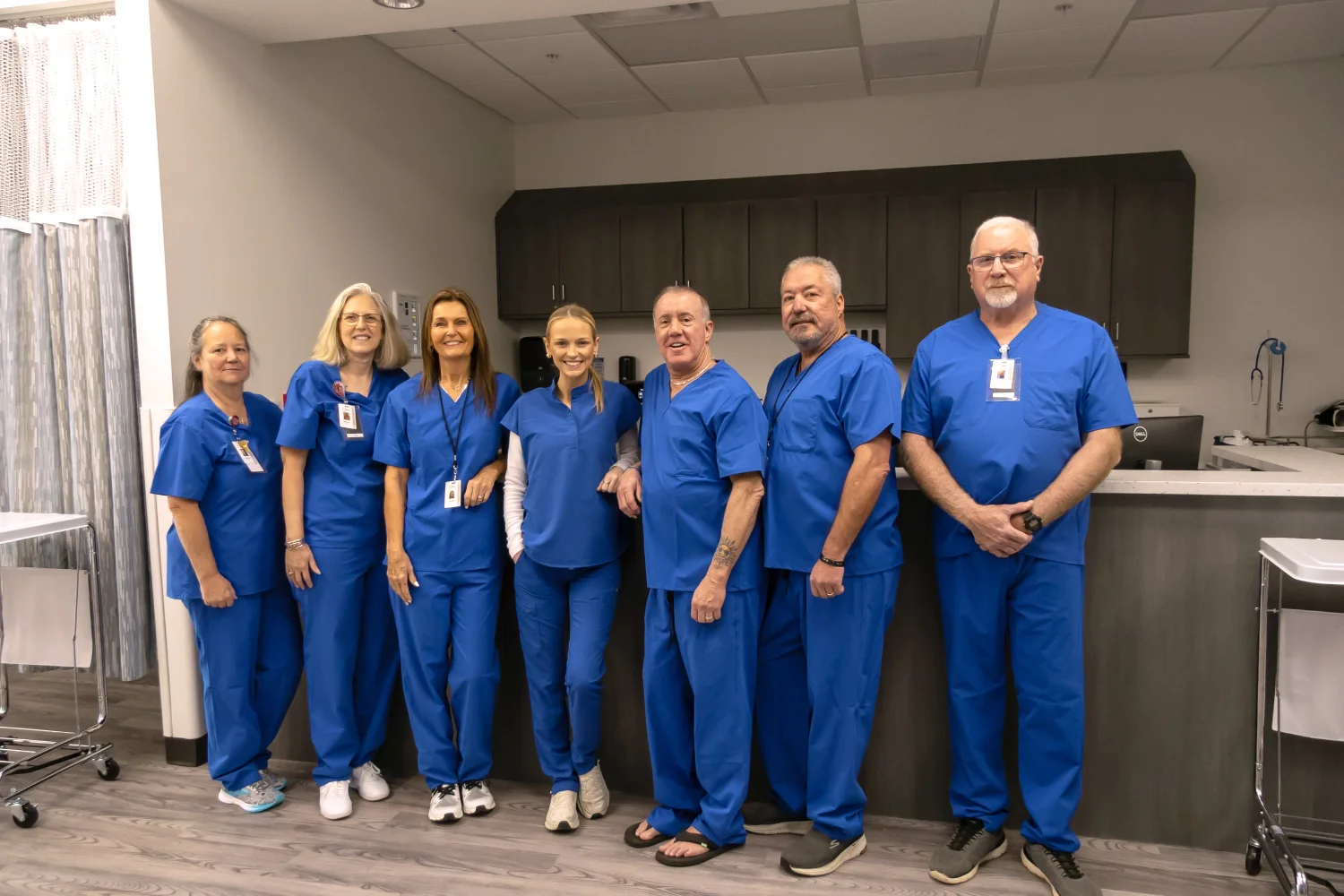
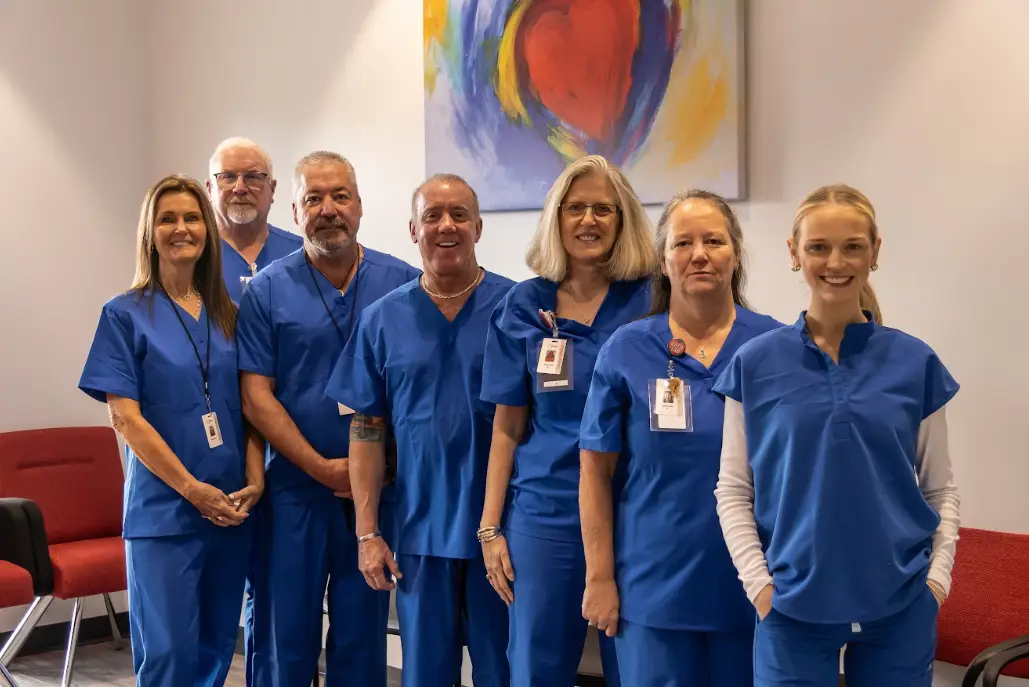
The care team.
Still have a question
Call and ask. A real person answers
The Hot Springs office can answer questions about an upcoming appointment, a test you have been referred for, or what to bring with you.
If you are having chest pain, shortness of breath, or any symptom you think may be an emergency, call 911. Do not wait for a call back. Please do not send medical details through this website; it is not a secure or monitored channel.